
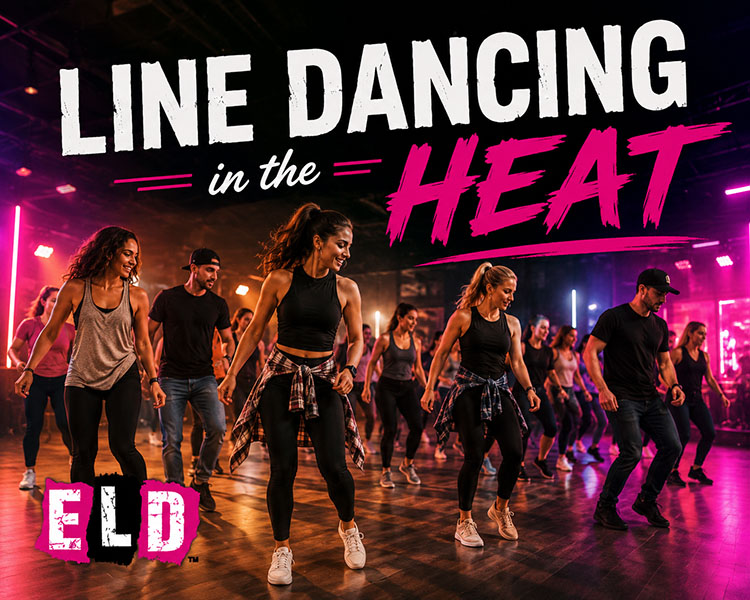
Dancing in the heat – an instructor’s guide
When temperatures rise, line dance teachers face a difficult balancing act: keeping their classes engaging and productive while also protecting their dancers from the very real risks associated with exercising in extreme heat.
Unlike many forms of exercise, dance often combines continuous movement, intense physical exertion, crowded studio spaces, and sometimes performance-driven mindsets — all of which can increase the likelihood of overheating and dehydration.
In hot weather, safety has to come first. A successful line dance class during a heatwave is not the class where dancers leave exhausted; it is the class where everyone leaves feeling safe, supported, and well enough to return another day.
One of the biggest challenges for line dance instructors, and those running any form of exercise class, is recognising just how quickly halls can become unsafe. Even on moderately hot days, additional mirrors, lighting, poor airflow, and large class sizes can cause indoor temperatures to climb rapidly. Dancers may also be reluctant to admit they are struggling, especially in busy class environments. This means instructors need to take a proactive approach rather than waiting for problems to appear.
Before the class even begins, it is worth assessing whether the session needs to be adapted. If the venue feels excessively warm or poorly ventilated, the original lesson plan may no longer be appropriate. Fast paced and lengthy dances can place too much stress on the body in extreme heat. In some situations, shortening the class, reducing the intensity of the dances, or moving to a cooler time of day may be the safest option.
Communication with their dancers is equally important. Encouraging students to arrive hydrated, wear lightweight clothing, and bring plenty of water can make a significant difference. More importantly, instructors should create an atmosphere where dancers feel comfortable taking breaks or slowing down if needed. During hot weather, resting is not a sign of weakness — it is a sensible response to challenging conditions. It is important to remind dancers that they should still be wearing sensible and supportive footwear, sandals, flip flops and crocs are not!
The class structure often needs adjusting during extreme heat, frequent pauses for drinks and recovery should become a normal part of the session rather than an interruption to it. Hydration itself deserves constant attention. Many dancers will underestimate how much fluid they lose through sweat, particularly in busy venues, waiting until someone feels thirsty is often too late. Regular water breaks throughout the class can help prevent dehydration before symptoms begin. Instructors should also watch carefully for signs that a dancer may be struggling physically. Dizziness, unusual fatigue, headaches, nausea, poor coordination, or confusion can all indicate the onset of heat-related illness.
Heat exhaustion can develop surprisingly quickly, and instructors play an important role in recognising and responding to heat-related illnesses, particularly during high-energy classes, during the summer, or sessions held in warm or poorly ventilated venues. Heat-related illness occurs when the body becomes unable to cool itself effectively through sweating and circulation, usually as a result of intense physical activity, dehydration, high temperatures, or humidity. Understanding the symptoms and acting quickly can prevent a minor problem from becoming a serious medical emergency.
The earliest stage is often heat cramps, which are painful muscle spasms usually affecting the legs, arms, abdomen, or back. These cramps occur when the body loses water and important salts through sweating meaning that dancers may complain of tight or painful muscles.
If overheating continues, a person may develop heat exhaustion. Symptoms commonly include heavy sweating, pale or clammy skin, dizziness, headache, nausea, vomiting, weakness, fatigue, and muscle cramps. A dancer may appear unusually tired, struggle to keep up with choreography, become irritable, lose focus, or seem unsteady and poorly coordinated. They may also complain of feeling faint, thirsty, or chilled despite the heat. Breathing and heart rate may become faster than normal as the body works harder to cool itself down. Without treatment, heat exhaustion can worsen quickly.
The most serious form is heat stroke, which is a life-threatening emergency requiring immediate medical attention. Symptoms include confusion, disorientation, slurred speech, collapse, fainting, seizures, or loss of consciousness. The skin may become hot, red, and dry because the body has stopped sweating, although some people may still sweat heavily. Body temperature rises dangerously high, and the person may have a rapid pulse, difficulty breathing, or appear agitated and confused. Heat stroke can lead to organ damage or death if not treated immediately.
Certain individuals are more vulnerable to heat-related illnesses, including children and teenagers, older adults, pregnant individuals, dancers returning after illness, people with asthma, diabetes, heart conditions, or other underlying health concerns, and anyone taking medication that affects hydration or temperature regulation. New students or dancers who are not used to intense exercise or warm environments are also at increased risk.
Line dance instructors can help prevent heat-related illness by encouraging dancers to drink water regularly before, during, and after class, allowing frequent rest breaks, and ensuring halls are well ventilated and not overcrowded, they should also encourage their dancers to wear light, breathable clothing where appropriate. If a dancer shows symptoms of overheating, activity should stop immediately. Move the person to a cool area, loosen unnecessary clothing, encourage small sips of cool water if they are fully conscious, and cool the body using fans, cool towels, or damp cloths. Symptoms should be monitored closely, and emergency medical assistance must be called immediately if there are signs of heat stroke, collapse, confusion, seizures, or loss of consciousness.
Ventilation can also make a major difference to class safety. Opening doors and windows, using fans appropriately, reducing overcrowding, and allowing dancers more personal space can help lower the overall heat burden in the room. Instructors should also be aware that excessive sweat and humidity can make floors slippery, increasing the risk of injury alongside heat-related illness.
Perhaps the most important mindset shift during extreme weather is understanding that dance classes do not need to operate at maximum intensity to be worthwhile, the many other benefits of the class such as the social aspect and class community are just as important. Ultimately, the instructor needs to set the tone for how seriously heat safety is taken, when they openly adapt classes, encourage hydration, and prioritise wellbeing over performance, dancers are more likely to listen to their own bodies and make safer choices themselves.
Extreme heat is no longer an occasional inconvenience; it is becoming an increasingly common part of teaching and training environments. By planning ahead, staying observant, and being willing to adapt, instructors can continue delivering positive, productive classes while keeping their dancers safe.






Comment (1)
Excellent. Thank your for the reminder and your advice